Press Kit
Everything a producer, publicist, or event organizer needs — without having to ask.
Download the full kit (ZIP) Or just the one-page overview (PDF) →
Biography
short bio · 48 words
Gregg Roman is the author of The Closing Window and The Carthage Doctrine. An IDF veteran who served in Israel’s Ministry of Defense and advised its deputy foreign minister, he has taught counterterrorism at West Point and appears in the media hundreds of times a year.
medium bio · 118 words
Gregg Roman writes about how free people fight, what it costs, and how they win. He learned the subject the hard way: as an American volunteer in the Israel Defense Forces, then inside Israel’s Ministry of Defense, then as an advisor to the country’s deputy foreign minister. He has taught counterterrorism to cadets at West Point and directs a Middle East–focused research organization in Philadelphia. His debut novel, The Closing Window, follows a Washington think tank running networks inside Iran during the thirty-nine-day war. His doctrine book, The Carthage Doctrine, arrives in October 2026, and a three-volume history of citizen volunteers — Repaying Lafayette, Contraband Patriots, and Alone in the Ranks — follows. He keeps the count at greggroman.com.
long bio · 300 words
Gregg Roman was a suburban American kid who crossed an ocean to find out whether the things he believed were true. The answer took twenty years to arrive, and it became five books.
He enlisted in the Israel Defense Forces as a foreign volunteer — the kind of soldier Israel calls a chayal boded, a lone soldier — and stayed to work inside the country’s Ministry of Defense during the years when the peace process was dying and nobody in the rooms wanted to say so. He served as an advisor to Israel’s deputy foreign minister, taught counterterrorism to cadets at West Point, and now directs a Middle East–focused research organization in Philadelphia, where his work runs from policy analysis to operations against the extremist networks most institutions only write about. He appears in international media hundreds of times a year, from Fox News and i24NEWS to the BBC and Al Jazeera.
His books make one argument five ways. The Carthage Doctrine (October 2026) states it plainly: conflicts end in decisive victory, not managed decline. The citizen-volunteer trilogy — Repaying Lafayette, Contraband Patriots, and Alone in the Ranks (2027) — supplies two and a half centuries of evidence: the Americans who fought for other nations’ freedom, the underground that armed Israel in 1948, and the lone soldiers of the IDF. And his debut novel, The Closing Window (out now), carries the argument into the reader’s chest: a thriller about a Washington think tank running live networks inside Iran as the window for action closes.
Every book he writes is one entry in the same ledger: the record of what it costs free people to stay free, and of the volunteers who pay it when governments won’t. Someone has to keep the count.
Photographs

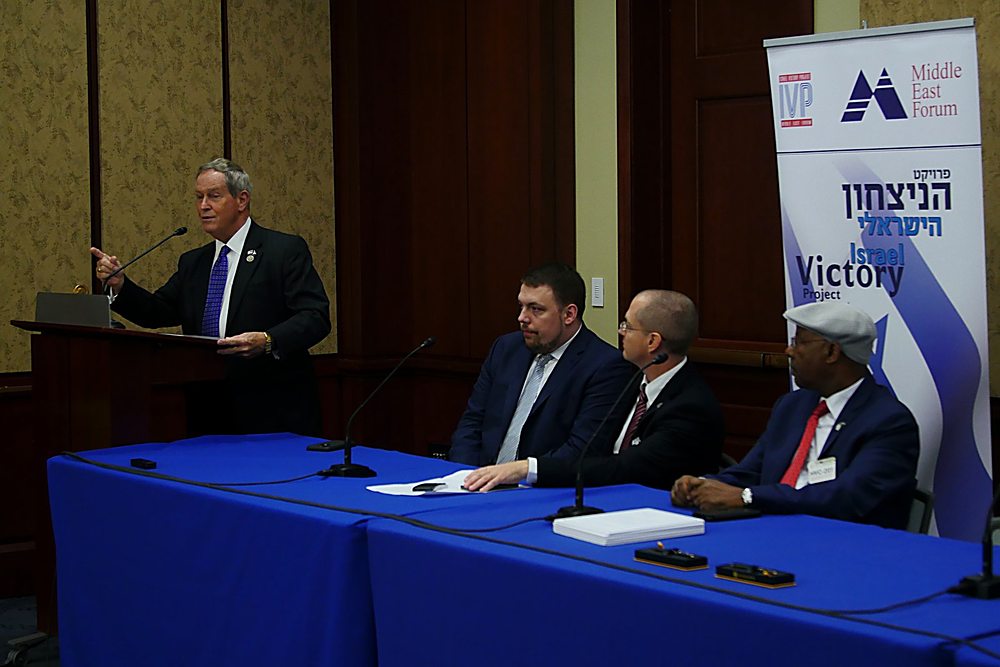
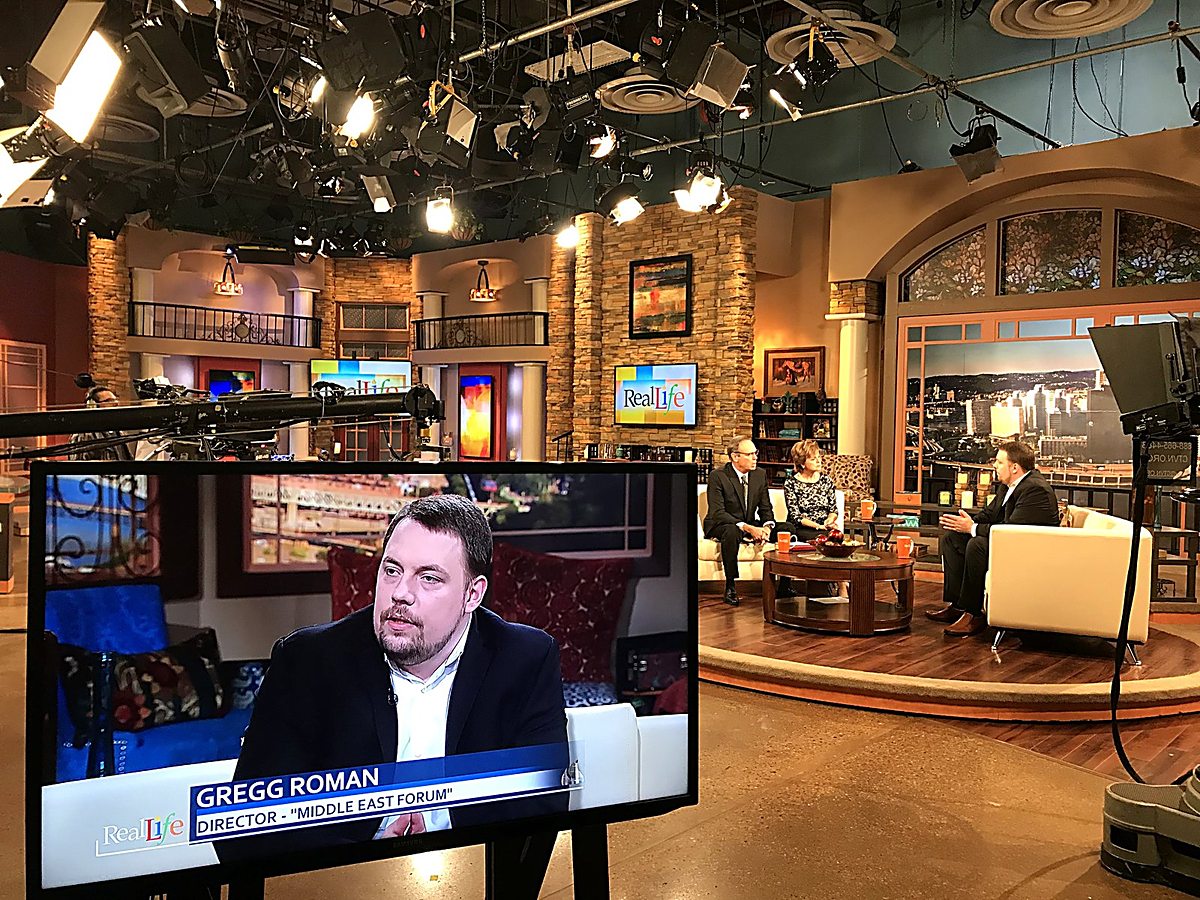
Click any photo for the web-size file; print resolution ships in the kit.
The kit download includes two
print-resolution author portraits (in headshots/, with credit lines) and a
set of action photographs — Capitol Hill, the Knesset, the television studio — in
photos/. Additional event photography is available on
request.
The books, at a glance
One argument, five books: a doctrine, a citizen-volunteer trilogy, and a novel. “How free people fight, what it costs, and how they win.”
The Carthage Doctrine · October 2026
The Carthage Doctrine: at a glance
The West doesn’t lose its wars. It declines to win them.
- Written before the war it predicted, read after it — opens with the author counting to ninety on a shelter floor with his children, and closes by auditing the thirty-nine-day war against his own doctrine.
- A doctrine with hard benchmarks, not slogans — four verifiable victory conditions, the force-versus-victory distinction, and an operational rule separating ideology from population.
- Part memoir, part field manual — two decades from the IDF and the deputy foreign minister’s office to the investigation that exposed over $122 million in taxpayer grants to terror-linked organizations, ending with a three-pillar post-victory framework and “Ten Ways to Fight in the Narrative War.”
- Publication
- October 2026
- Categories
- Current affairs · National security · Memoir
- For readers of
- Victor Davis Hanson’s The Case for Trump-era strategy writing · Michael Doran’s policy essays · Edward Luttwak’s Strategy
- Why now
- Publishes October 2026, as the ceasefire debates and the next Iran question dominate the policy agenda.
Repaying Lafayette · Coming 2027
Repaying Lafayette: at a glance
Lafayette came to us first. This is the ledger of the Americans who repaid him.
- The first complete history of Americans who volunteered for other nations’ freedom — a 50-episode census, 1775–2026, from the philhellenes to the Donbas.
- Built on a 555-source bibliography, with contested numbers printed as ranges and the four audit questions applied to every episode.
- The semiquincentennial book — Lafayette’s debt, opened at Picpus and serviced for 250 years.
- Publication
- 2027
- Categories
- American history · Military history
- For readers of
- Rick Atkinson’s Liberation Trilogy readers · Nir Arielli’s From Byron to bin Laden · Adam Hochschild’s Spain in Our Hearts
- Why now
- The 250th anniversary of American independence — the strongest tailwind a history of American volunteers will ever have.
Contraband Patriots · Coming 2027
Contraband Patriots: at a glance
In 1948, ordinary Americans smuggled a state into existence. Then they stood trial for it.
- The full arc of the American underground that armed Israel — from the Sonneborn meeting of July 1945 to the smuggling trials and the pardons of Kennedy, Clinton, and George W. Bush.
- Roughly 2,400 tons of materiel in some 800 disguised consignments — bought at scrap prices from the U.S. government itself, shipped as “textile machinery.”
- The moral engine of the trilogy — conduct first, criminality later, and the price kept honestly on both sides of the ledger.
- Publication
- 2027
- Categories
- History · Jewish interest · Israel
- For readers of
- Leonard Slater’s The Pledge (the story it completes) · Ben Macintyre’s narrative espionage histories
Alone in the Ranks · Coming 2027
Alone in the Ranks: at a glance
Some funerals were empty. One drew thirty thousand strangers.
- The first comprehensive history of the lone soldier phenomenon in any language — from the Zion Mule Corps and Machal to the post–October 7 generation.
- 6,731 lone soldiers served in the IDF as of August 2024 — and more than four in ten were not immigrant volunteers but Israelis without family support.
- A documentary history with the shadow side kept in — the audits, the bureaucratic failures, the suicide cluster — alongside the crowds at Mount Herzl.
- Publication
- 2027
- Categories
- History · Jewish interest · Military history
- For readers of
- Matti Friedman’s Pumpkinflowers · Micah Goodman readers · Daniel Gordis’s histories
The Closing Window · Out now
The Closing Window: at a glance
The people who were supposed to act wouldn’t. The people who could — did.
- Opens inside the machine — a Revolutionary Guard air-defense colonel ordered at 4:40 a.m. to turn his battery against an Iranian city, stalling the order in front of a deputy who may be the regime’s eyes.
- A Washington thread with teeth — the private Meridian Institute becomes the U.S. government’s only working window into a country it blinded and can no longer see.
- The count is the book’s signature — a nurse in Karaj records the dead the state won’t number “so the night can’t round them off to zero.”
- Fiction not written at a safe distance — built from years of conversations with Iranians who spoke at real risk, with methods and details altered to protect them.
- Publisher
- Middle East Forum Press
- ISBN (print)
- 979-8-9967558-0-6
- ISBN (ebook)
- 979-8-9967558-1-3
- Publication
- July 2026
- Formats
- Hardcover · Paperback · Ebook
- Pages
- ~286
- Categories
- Thriller · Espionage · Political fiction
- For readers of
- Daniel Silva · Gerald Seymour’s moral thrillers · David Ignatius’s Agents of Innocence
Suggested interview questions
Story (general audiences)
- The Meridian Institute in The Closing Window isn’t a government agency. Why tell a spy story from inside a think tank?
- You’ve lived parts of this world. Where does the fiction end?
- The novel keeps a literal count of names. Where did that image come from?
- Your characters choose between acting and living with the cost, or waiting and living with that. Which failure frightens you more?
- What did writing fiction let you say that your policy work couldn’t?
Argument (policy audiences)
- “The West doesn’t lose its wars. It declines to win them.” Defend that.
- What does the Carthage Doctrine actually prescribe — and where’s the line between decisive victory and cruelty?
- You call the volunteers a “parallel foreign policy.” Should a state tolerate that?
- Your Lafayette census runs fifty episodes. Which one should policymakers study first?
- What did the 1948 arms underground get right that official policy got wrong?
Contact
Media, speaking, and rights inquiries: the contact form. This kit covers Gregg Roman’s work as an author; inquiries about his organizational role go through the organization’s press office.