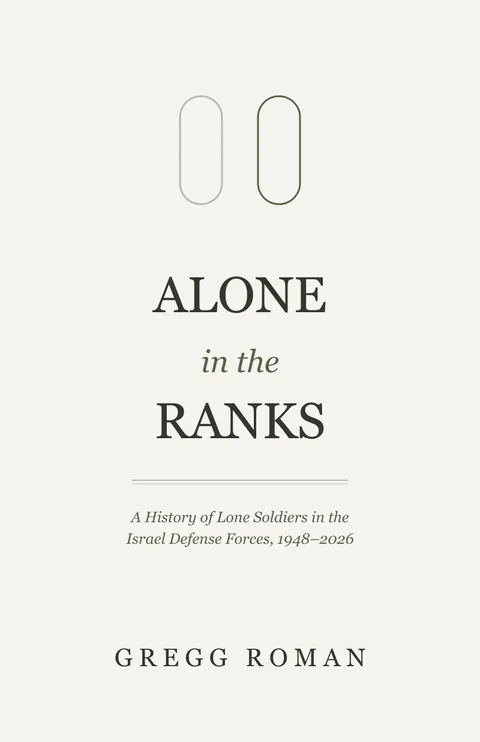
Some funerals were empty. One drew thirty thousand strangers. Between them runs the story of the lone soldier.
Alone in the Ranks — A History of Lone Soldiers in the Israel Defense Forces, 1948–2026
The Story
In 1948, ace pilot George Beurling died on his way to fight for Israel, and almost no one claimed him. In 2014, thirty thousand strangers climbed Mount Herzl to bury Max Steinberg. Between those two funerals runs the history of the IDF’s lone soldiers — the volunteers who leave home to serve, the country that embraces them, and the system that too often fails them. An honest ledger: the glory and the neglect, both counted.
In the vocabulary of the Israel Defense Forces, a chayal boded — a lone soldier — is a soldier without family in Israel. The term is bureaucratic; the reality it describes is ancient and simple. A lone soldier is the one with no home to go to when the base empties out for Shabbat, no parents at the swearing-in ceremony, no one to notice, quickly, if something starts to go wrong. And, in the worst case, a lone soldier is the one whose funeral might be empty.
Alone in the Ranks is the first book to assemble their whole story: the mule drivers of Gallipoli; the Machal volunteers of 1948 — an air force two-thirds foreign, a first general from Brooklyn buried at West Point; the quiet decades in which the army discovered lone soldiers of its own making; the December 1975 standing order that gave the situation a name; and the ecosystem that exists nowhere else on earth — adoptive kibbutz families, subsidized apartments, a paratroop lieutenant colonel the country came to call the father of the lone soldiers — through October 7, 2023, when lone soldiers were among the first to die and the first to fly home to fight.
And it keeps the second column too: the State Comptroller audits that found no two agencies could agree on who counted as a lone soldier, the discharged veterans sleeping in stairwells, the suicide cluster the army was slow to see, and the critique that a nation built an industry of celebration atop a deficit of care. The thirty thousand strangers at a funeral and the veteran alone in a rented room are the same phenomenon, seen from opposite sides. A history that includes only one of them is not a history.
Prologue — Two Funerals
“A lone soldier is the one whose funeral might be empty.”
Why I wrote this
Two funerals frame this book: a Canadian ace lying unclaimed in a Roman cemetery in 1948, and thirty thousand strangers climbing Mount Herzl in 2014 for a Californian they had never met. We do not get to keep only the second one. I was a lone soldier’s kind of volunteer myself, and I know how much of the literature is devotional — written to honor, to fundraise, to inspire. Honor is owed. But a history that omits the audits, the stairwells, the suicides, and the young people the loneliness broke would not honor anyone; it would only flatter. This book keeps both columns, because that is what keeping the count means.
— Gregg Roman
Coming 2027
Add your name to the Ledger — I’ll write when it’s ready.
Alone in the Ranks: at a glance
Some funerals were empty. One drew thirty thousand strangers.
- The first comprehensive history of the lone soldier phenomenon in any language — from the Zion Mule Corps and Machal to the post–October 7 generation.
- 6,731 lone soldiers served in the IDF as of August 2024 — and more than four in ten were not immigrant volunteers but Israelis without family support.
- A documentary history with the shadow side kept in — the audits, the bureaucratic failures, the suicide cluster — alongside the crowds at Mount Herzl.
- Publication
- 2027
- Categories
- History · Jewish interest · Military history
- For readers of
- Matti Friedman’s Pumpkinflowers · Micah Goodman readers · Daniel Gordis’s histories